
Google Flow video editing: four practical AI editing tips
한 줄 결론: Google Flow video editing: four practical AI editing tips에서 먼저 볼 부분은 설정 방법, 자동화 흐름, 오류 대응입니다.
대상 독자: AI의 핵심 정보를 빠르게 판단하려는 독자입니다.
핵심 체크리스트
- Quick Answer
- Who This Is For
- Practical Workflow
검토 기준일: 2026년 5월 21일
검증 기준: 본문 출처 URL, 제품/서비스 공식 안내, 공개 자료를 우선 기준으로 확인합니다.

Quick Answer
Google Flow is useful when you need a repeatable creative workflow rather than a one-off experiment. Start with one narrow goal, generate a small test output, compare the result against a clear checklist, and refine the prompt or settings before scaling the workflow.

Who This Is For
This guide is for creators, bloggers, marketers, and solo operators who want practical AI output without spending hours testing random prompts. The goal is to make the workflow simple enough to repeat and specific enough to improve.
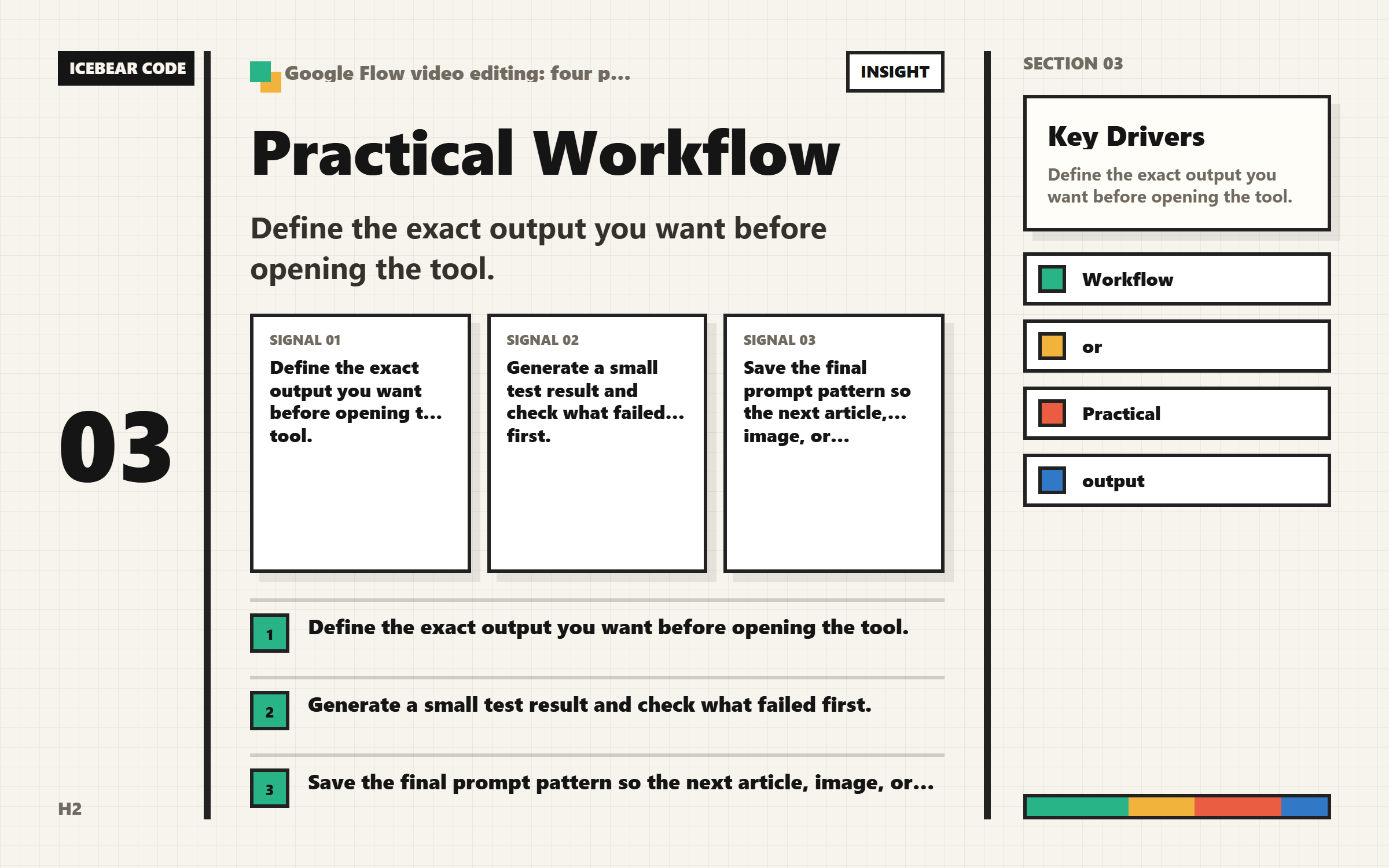
Practical Workflow
- Define the exact output you want before opening the tool.
- Write one prompt that includes the subject, format, style, constraints, and success criteria.
- Generate a small test result and check what failed first.
- Adjust only one variable at a time, such as style, length, reference image, or output ratio.
- Save the final prompt pattern so the next article, image, or video can reuse it.
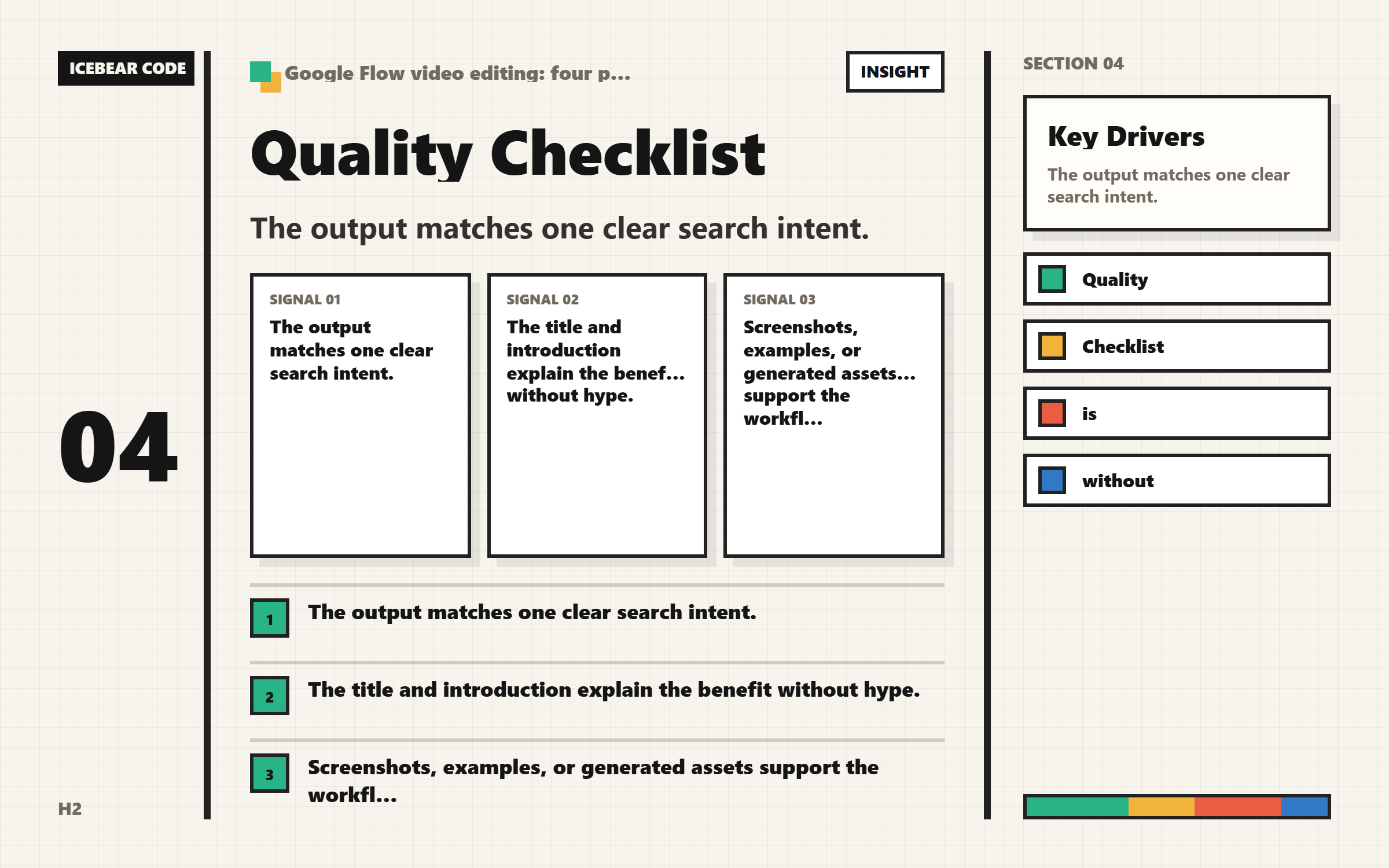
Quality Checklist
- The output matches one clear search intent.
- The title and introduction explain the benefit without hype.
- Screenshots, examples, or generated assets support the workflow.
- The reader can repeat the steps without needing the original Korean article.
- Any pricing, model, or feature limit is checked again before publishing.

Related Source
Source URL: 출처: icebear-code.tistory.com

'AI 자동화' 카테고리의 다른 글
| Midjourney画像改善: 平凡な生成結果をよくする5つの方法 (0) | 2026.05.21 |
|---|---|
| Midjourney高度設定: 安定した画像を作るパラメータ活用 (0) | 2026.05.21 |
| Nano Banana Pro and Gemini 3 Pro Image: a practical image generation workflow (0) | 2026.05.21 |
| Google Flow and Veo 3.1: create AI videos with a repeatable workflow (0) | 2026.05.21 |
| AI prompt writing framework: ask better questions and get better outputs (0) | 2026.05.21 |


댓글